


Dividing Door Technology Starts with Connected Panel Movement
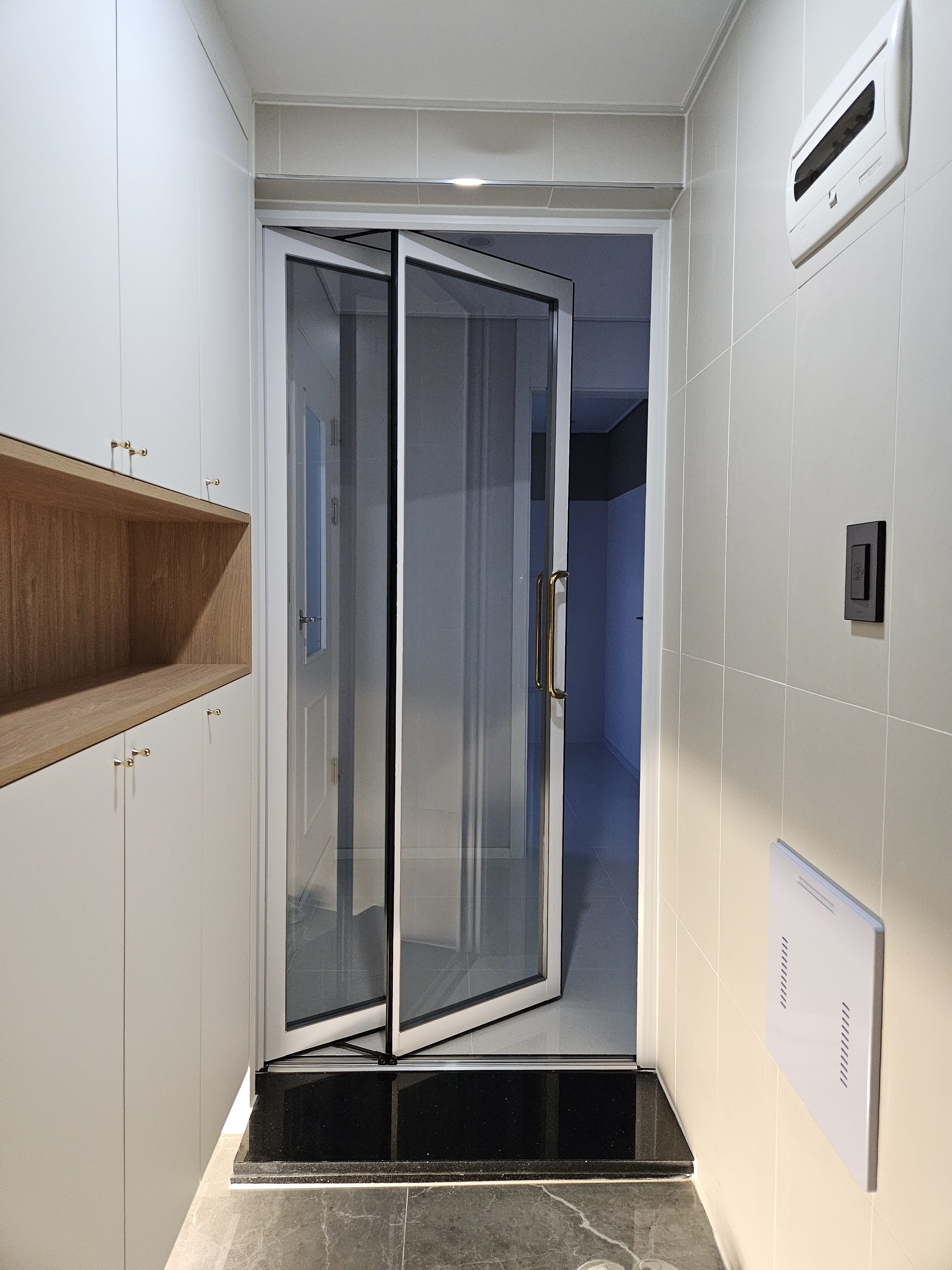
Dividing Door Technology uses a connected panel structure to create a different opening movement from conventional swing or sliding doors. The provided images show how two or more panels remain linked while their angles change during opening. Instead of separating or moving independently, the panels work together through one coordinated action. This connected movement forms the basic principle behind the Dividing Door system.
The core idea is to divide one large door movement into several smaller panel movements. As the panels rotate and move together, the system can reduce the area required for opening. This allows Eager.D Dividing Door Technology to use available space more efficiently, especially in narrow residential interiors. The close-up images of the upper connection and frame show that the movement depends on a controlled linkage structure rather than a simple folding action.


Divided Rotation Reduces the Swing Radius
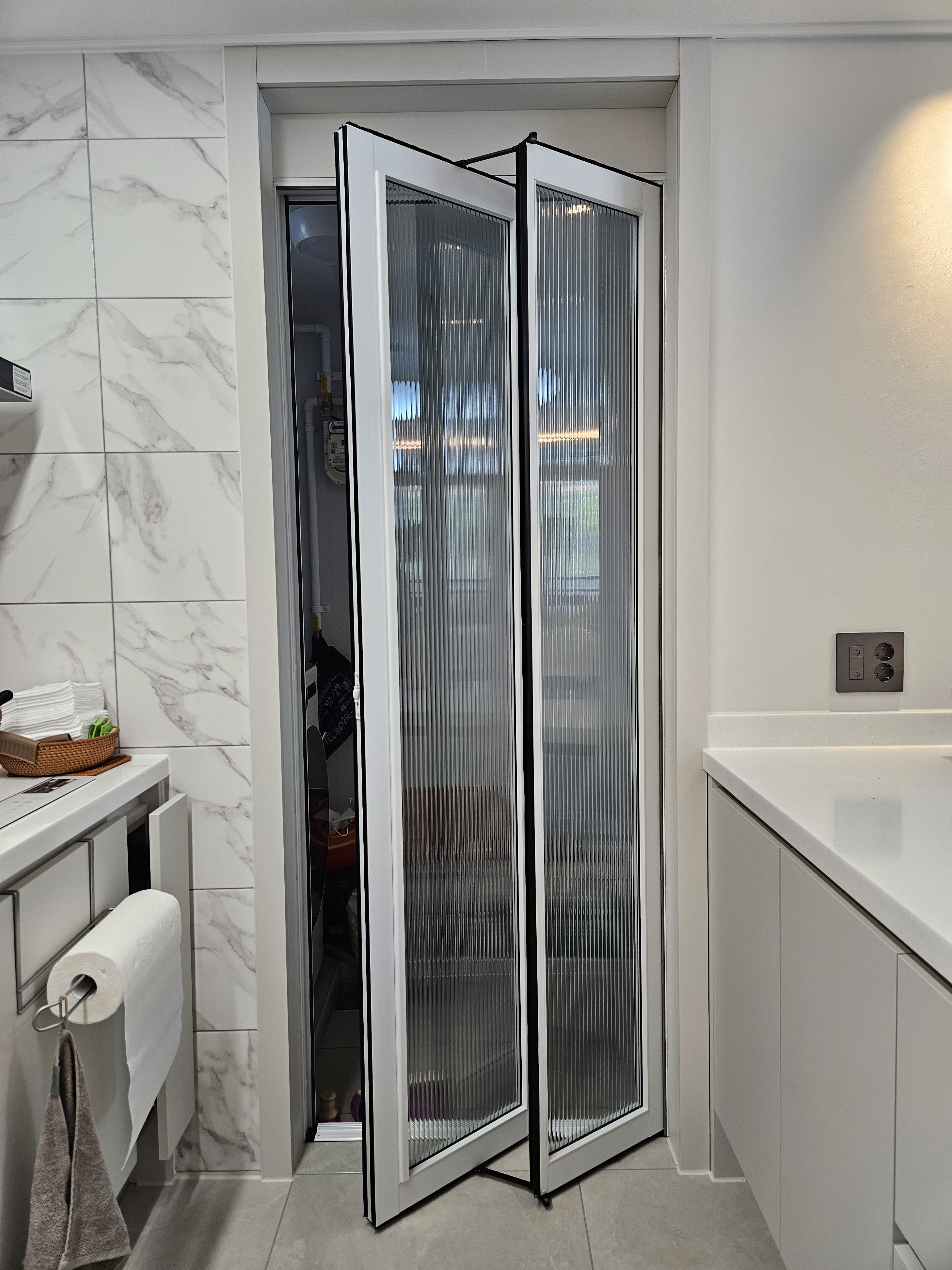
One of the key advantages of Eager.D Dividing Door Technology is the reduced swing radius. A conventional single swing door needs a relatively large clear area to open. Eager.D divides this movement across connected panels, allowing each panel to rotate through a smaller area. The installation images clearly show how the panels form angled positions while opening without requiring the entire width of the door to swing into the room.
This principle becomes especially valuable in compact entrances, utility rooms, and narrow passages. Cabinets, appliances, walls, and other interior elements can limit the space available around a doorway. By reducing the swing radius, Eager.D helps users preserve more usable floor area. The system focuses on practical movement while maintaining a wide and comfortable passage when the door opens.


One Motion Controls Multiple Panels
Eager.D Dividing Door Technology allows multiple panels to move together through one opening action. The images show the panels changing from a closed position to a diagonal configuration and then opening further toward one side. This synchronized movement is one of the most recognizable characteristics of the system. Users do not need to operate each panel separately during normal opening and closing.
The linkage between the panels helps maintain a controlled opening path. This structure also allows the door to stop at different positions depending on how much access the user needs. A partially opened position can maintain visual separation while allowing airflow, while a wider opening provides easier movement between spaces. This combination of synchronized movement and flexible positioning gives the Dividing Door a different functional character from conventional interior door systems.


Dividing Technology Designed for Real Interior Spaces
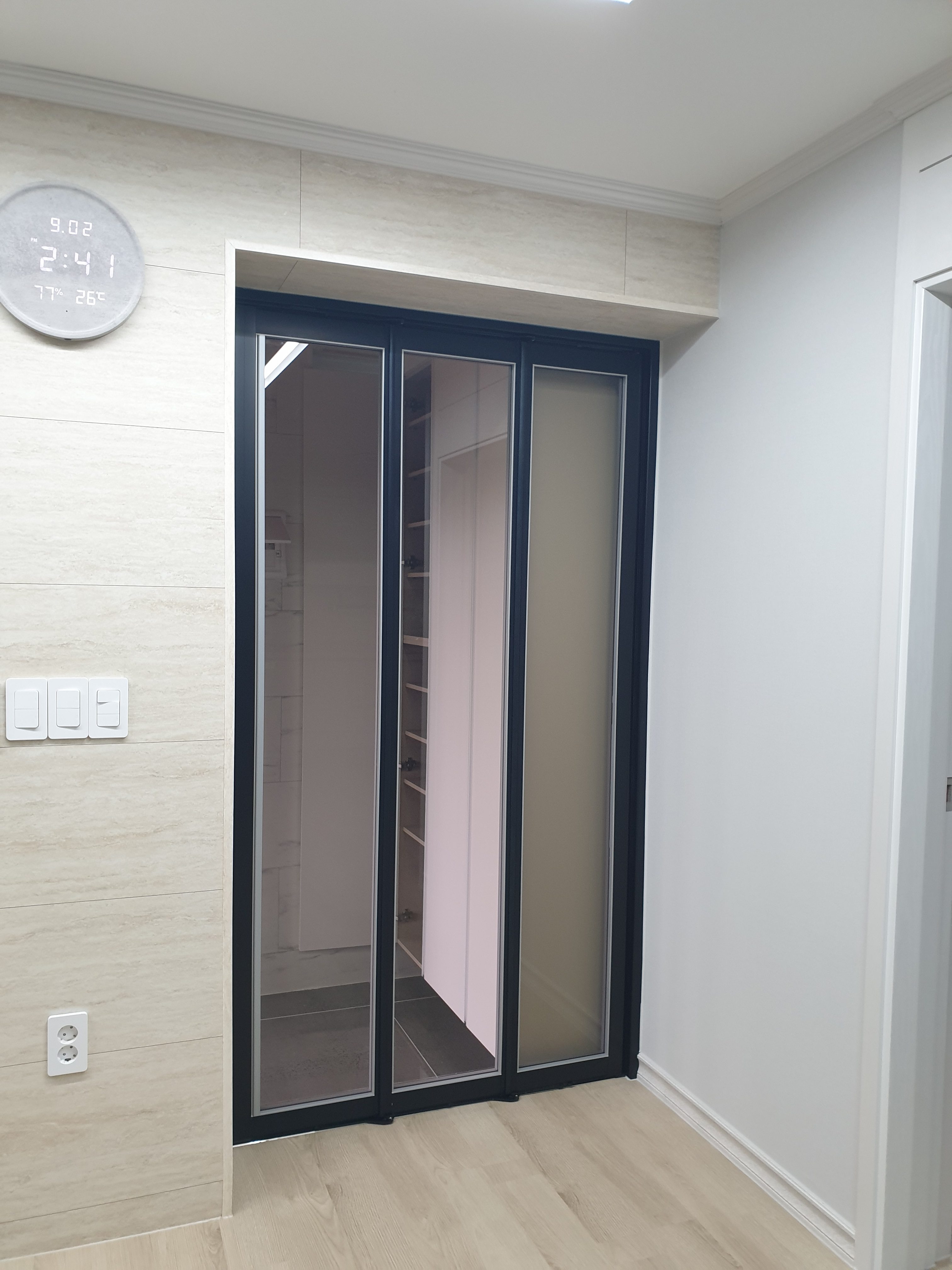
The practical value of Eager.D Dividing Door Technology becomes clear when the system is installed in real residential environments. The provided photos show applications near kitchens, utility rooms, entrances, and narrow interior openings. In each case, the connected panels use the available space while maintaining the same core opening principle. Different frame finishes, glass patterns, and solid panels can change the appearance without changing the fundamental movement.
Eager.D has developed this mechanism to combine space efficiency with everyday usability. The Dividing Door does not simply fold or slide to one side. Its panels remain connected and move through a controlled rotating sequence that reduces swing space and creates a distinctive opening path. For projects where limited space, convenient access, and flexible separation matter, Eager.D Dividing Door Technology provides a practical approach to interior door design.

댓글 남기기