


Space-Saving Door Principle Based on Divided Movement
The Space-Saving Door Principle begins with the movement of divided door panels. A conventional single-leaf door requires a large clear area around the doorway. The entire panel rotates through one broad arc.
This swing path can interfere with furniture, appliances, or storage units. It can also interrupt normal walking routes in compact homes. The Space-Saving Door Principle offers a different approach.
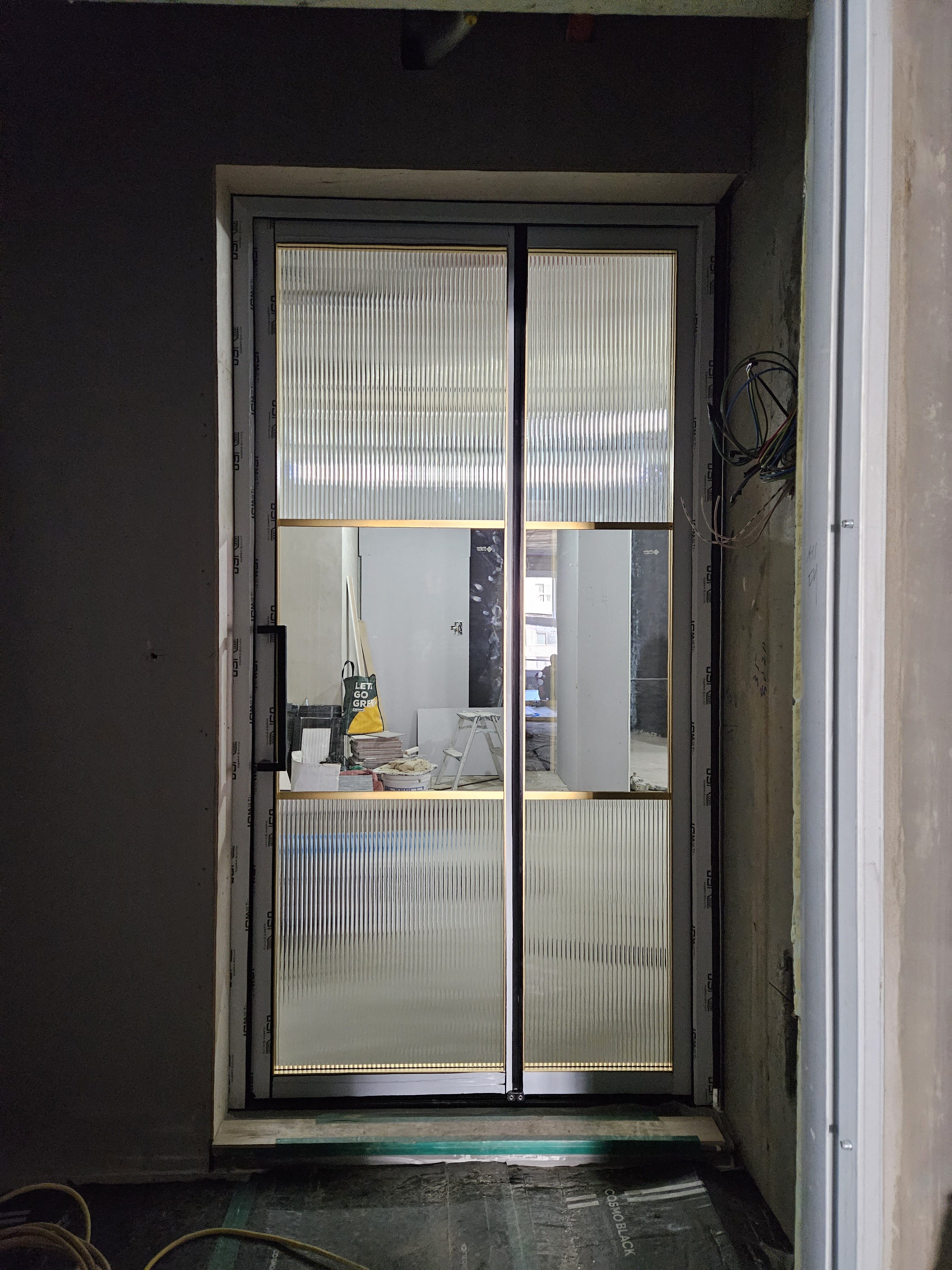
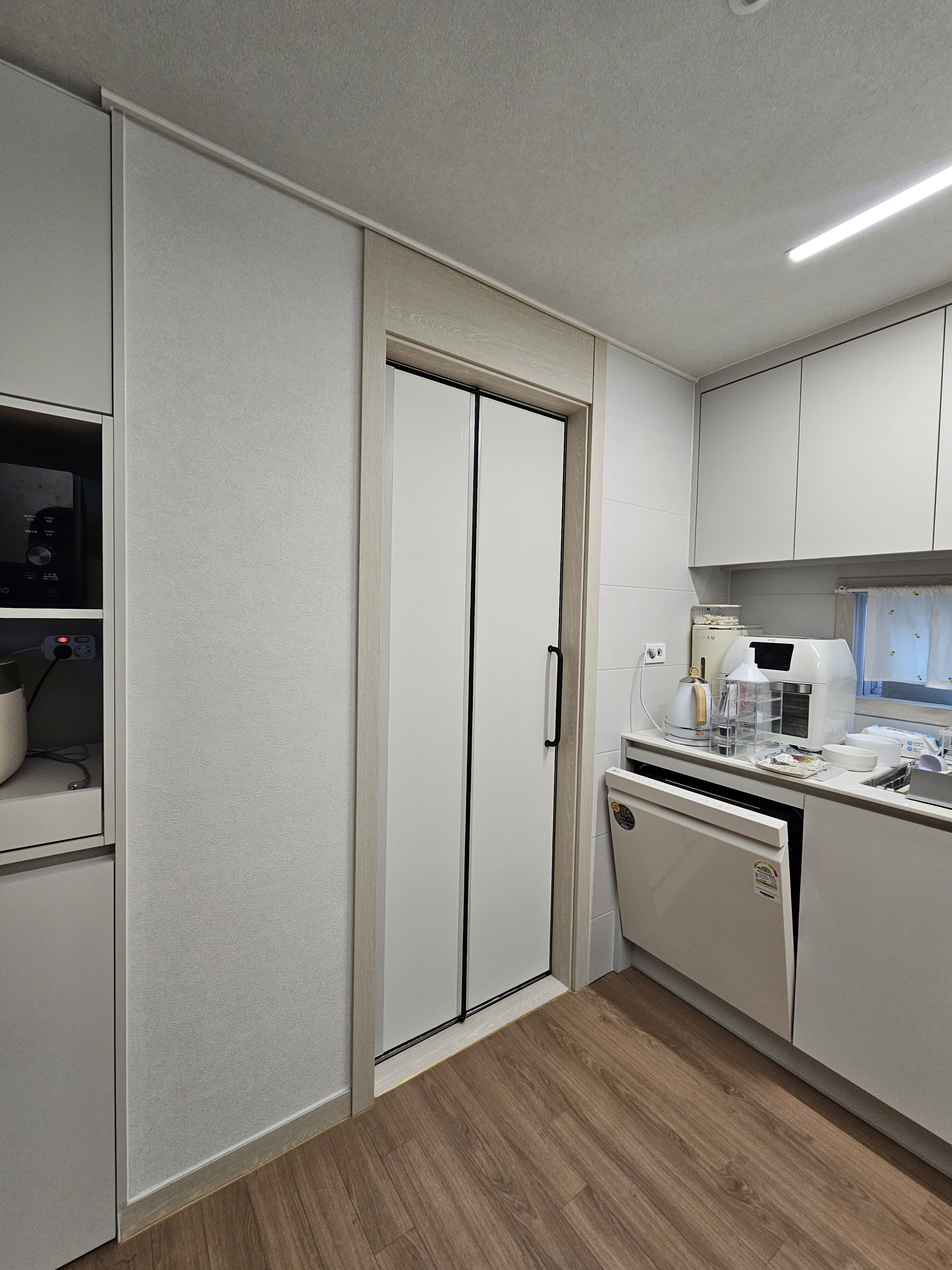
Eager.D uses connected panels that change angle while opening. Each panel moves within a smaller area. The connected sections gradually gather toward one side of the frame. This reduces the floor space required for door operation.


Reduced Swing Radius Around Appliances and Storage
Utility rooms often contain large equipment and storage items. Washing machines, dryers, shelves, and baskets can occupy most of the available space. This leaves limited room for door movement.
The Space-Saving Door Principle helps reduce the required swing radius. Eager.D controls the connected panels within a more compact movement zone. This allows the door to operate closer to nearby equipment.
Users do not need to keep a large area empty near the entrance. The Space-Saving Door Principle can therefore support narrow residential layouts. It is suitable for laundry rooms, utility areas, and kitchen service spaces.


More Usable Floor Area Around the Doorway
A doorway should support the surrounding layout. It should not control how the entire room must be arranged. A large door swing can reduce usable floor space.
That space cannot easily hold furniture, baskets, or storage items. This becomes more important in smaller interiors. The Space-Saving Door Principle helps keep more floor area available near the entrance.
Appliances and storage items can remain relatively close to the doorway. The panels can still operate within their designed movement range. This Space-Saving Door Principle gives users more flexibility when organizing compact rooms.


Compact Movement for Everyday Residential Use
Many modern homes combine several functions within limited interior space. Kitchens may connect directly to laundry rooms, pantries, balconies, or utility areas. These layouts often leave little unused space.
The Space-Saving Door Principle is useful in these conditions. Eager.D uses linked panels that move together during opening. The panels change direction and gather toward one side.
This reduces the space required for the opening movement. The Space-Saving Door Principle also helps keep nearby floor areas available for daily use. It supports efficient layouts without requiring a large door swing zone.
For compact residential projects, this movement can offer a practical spatial advantage. It helps the doorway work within tighter interior conditions.


답글 남기기